Diameter and weight classes
Product measurements can be evaluated against configured sizing and grading ranges.

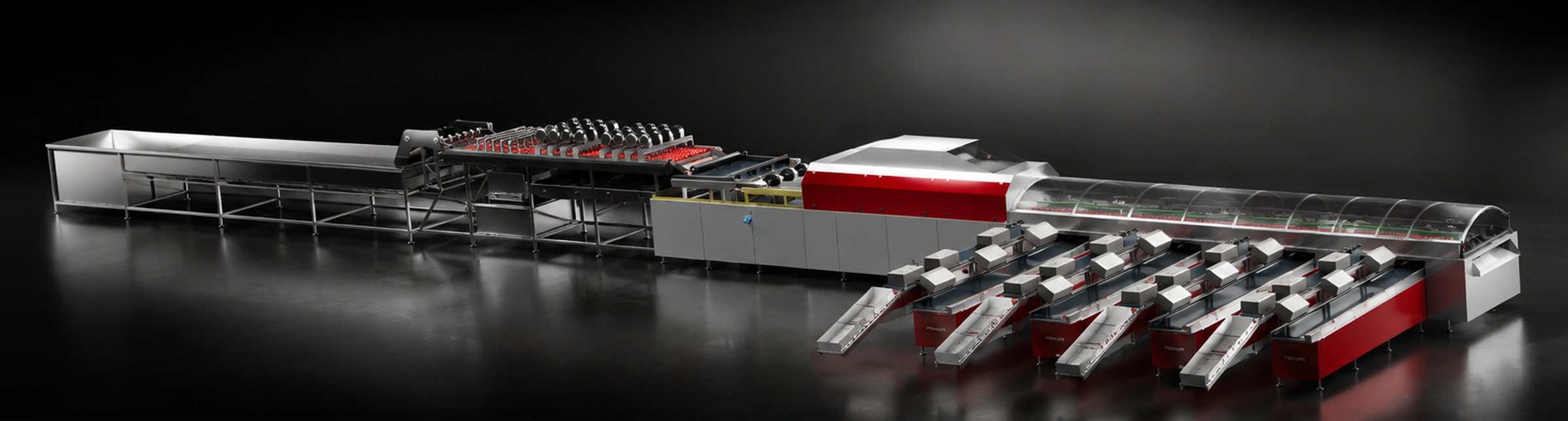
Vision Sort AI | combines industrial imaging, physical measurement, quality recipes and automated routing in one product-level decision process.
Vision Sort AI | brings visual and physical data together under the correct product identity. Quality criteria create a classification decision that is transferred to automation and applied at the correct outlet.
Product measurements can be evaluated against configured sizing and grading ranges.
Controlled images support product-level external quality and defect evaluation.
Each decision remains connected to the product until it reaches the assigned physical outlet.

A fruit sorting machine can combine sizing, weighing and visual quality inspection rather than treating them as disconnected processes. Product behavior, feeding rhythm, inspection points, target capacity, outlet structure and site conditions define the final system.
Fruit sorting machine, fruit grading machine, automatic fruit sorter, fruit sizer, optical fruit sorter and packhouse sorting equipment are common terms for this solution family. The correct term depends on whether the process emphasizes size, quality, defect inspection or physical routing.
As a Konya, Türkiye-based fruit sorting machine manufacturer, novaris develops mechanical design, industrial imaging, Vision Sort AI software and automation together. Apple Edition is active; Pear Edition and Peach Edition are product-specific development directions built on the shared Vision Sort AI architecture.
Fruit grading line, fruit sorting line, packhouse grading equipment, post-harvest fruit sorting and optical grading can describe different scopes within the same broader processing investment.
Product type, inspection scope, capacity, number of outlets, automation interfaces and physical layout are evaluated together.
Feeding, transport, rotation and alignment requirements are defined for the selected fruit and process.
The data types and quality criteria are selected according to the Edition and approved project requirements.
Line count, routing structure and automation interfaces are engineered around the facility.
Useful terminology helps people find the solution; product and process requirements define the actual line architecture.
Sorting describes routing products into outlets or classes. Grading describes the size, weight, appearance and quality criteria used to create those classes. A single system can perform both.
Depending on the product and Edition, the decision can include imaging, external defects, color, diameter, weight and configured quality recipes.
A fruit sizer separates products by physical size or weight. In a broader Vision Sort AI system, sizing can be combined with visual quality and defect criteria.
Apple Edition is the active product. Pear Edition and Peach Edition are product-specific development directions built on the shared Vision Sort AI architecture.
Yes. Line count, inspection points, capacity, sorting outlets and physical layout are defined around the production process and site.
Contact us to define product, capacity, analysis points, quality classes and facility integration requirements.