Controlled camera and lighting
Imaging conditions are engineered with product motion to produce comparable surface data.

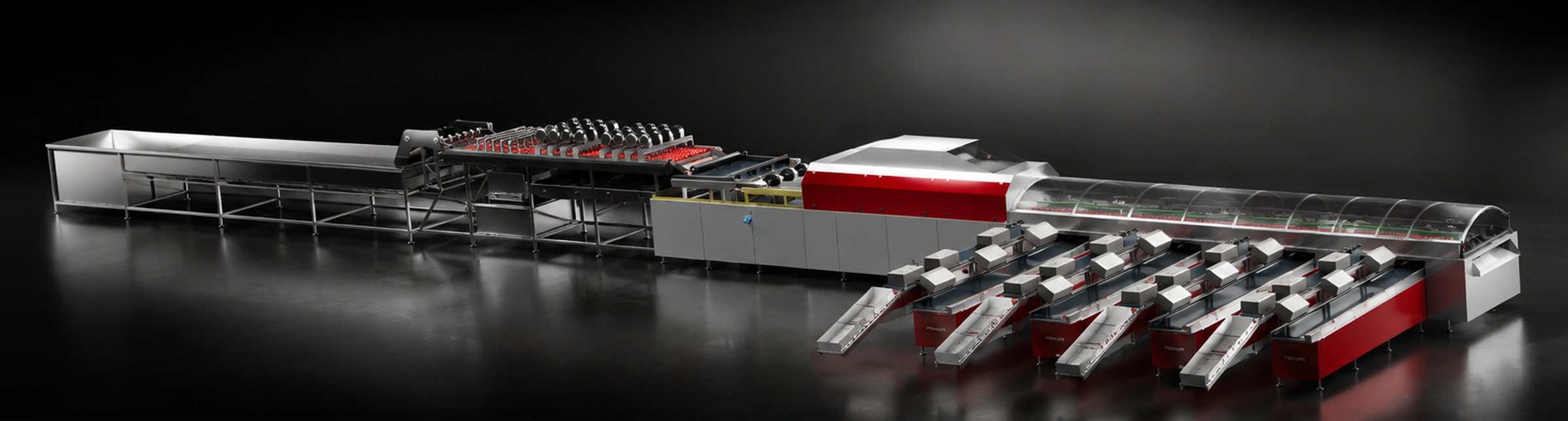
Apple Edition | evaluates surface, color and external defect signals from controlled images, interprets them through the quality recipe and converts them into a product-level grading decision.
External defect inspection becomes useful only when controlled imaging, product identity and explicit quality criteria are connected within the same decision chain.
Imaging conditions are engineered with product motion to produce comparable surface data.
Visible product features are processed as validated product-level observations.
Visual findings are interpreted through the operation’s approved classes and tolerances.
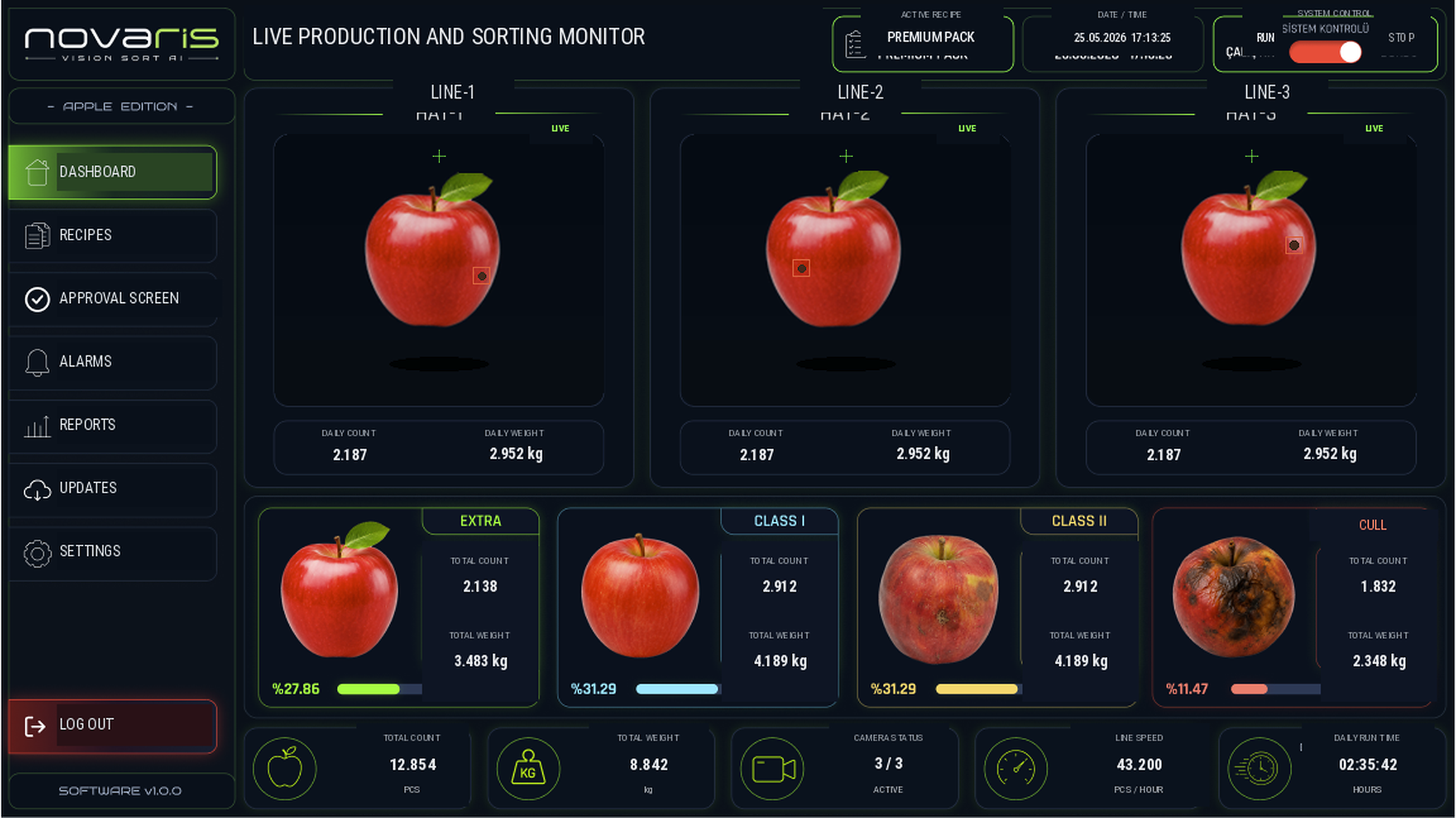
Apple defect detection and surface defect inspection are not limited to locating a region in an image. The system must know which product the observation belongs to, how multiple views relate and how the approved quality recipe interprets the signal.
Depending on project scope, external quality and color can be combined with diameter, weight and other physical measurements. Visual inspection and sizing therefore become parts of the same product-level grading process.
Quality classes, tolerances and routing rules are configured around the customer’s approved process. The final result remains attached to the product and is transferred to the correct physical outlet.
Apple defect detection, apple surface defect detection, external quality grading, fruit quality inspection and machine vision apple grading describe closely related parts of the visual quality process.
External quality signals, physical measurements and operating criteria are combined within one product-level decision process.
Controlled images are analyzed for visible defect and quality characteristics.
Findings are interpreted together with approved quality criteria and measurement ranges.
The final grade stays connected to the product and is applied at the assigned outlet.
Visual analysis should be designed together with stable imaging conditions and explicit quality criteria.
It evaluates visible surface, color, damage and defect signals from controlled images before they are interpreted through the configured quality criteria.
No. A visual detection is one input. The final grade can also use quality recipes, diameter, weight and other approved product-level measurements.
Stable lighting makes surface features more comparable between products and reduces changes caused by the imaging environment.
Yes. Classes, tolerances and routing rules are defined around the customer’s approved quality recipe and production requirements.
Discuss imaging conditions, quality classes, tolerances and automated routing requirements with novaris.