External defect and surface analysis
Controlled lighting and multiple views support product-level surface defect, external quality and color evaluation.

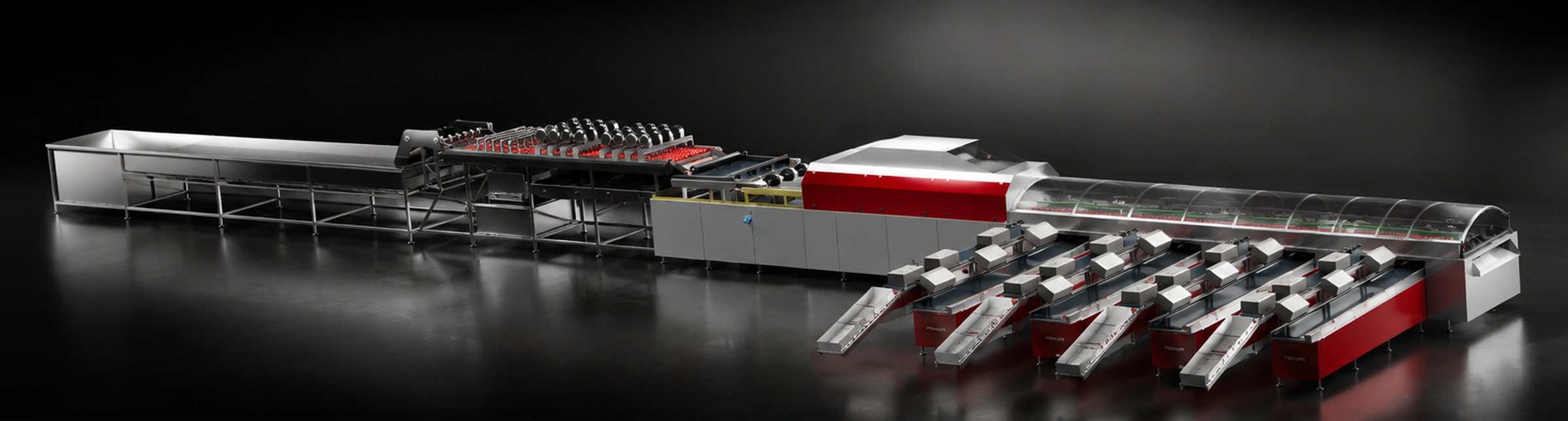
Apple Edition | evaluates each apple through imaging, size, weight, color and configured quality criteria, then transfers the product-level decision to automated routing.
Apple Edition | keeps multiple images and physical measurements connected to the same apple identity. Defect, color, diameter, weight and recipe criteria are evaluated together before routing is executed.
Controlled lighting and multiple views support product-level surface defect, external quality and color evaluation.
Vision-based size information and individual weighing remain tied to the same apple identity.
Classes, tolerances and outlets are configured around the operation’s approved quality requirements.

Apple grading machine, apple sorting machine, automatic apple grader, apple sorter and apple sizing machine are common commercial terms for closely related equipment. The actual project scope is defined by imaging, physical measurements, quality criteria, line capacity and the number of grading outlets.
For packhouses and post-harvest operations, Apple Edition can be configured as a new apple grading line or assessed for integration into an existing facility. Product behavior, feeding rhythm, inspection points, automation interfaces and site conditions shape the final architecture.
novaris is a Konya, Türkiye-based manufacturer that develops the mechanical design, industrial imaging, Vision Sort AI software and automation as one product-level decision system.
Depending on the process scope, buyers may describe the same investment as an automatic apple grading machine, apple sorting line, apple grading system, apple pre-sorting line or packhouse grading equipment. novaris defines the system by measurable quality criteria, capacity and integration requirements—not by a catalogue label.
Mechanical handling, machine vision, physical measurement and automation are engineered as one chain so that each decision remains connected to the correct apple.
Product motion is prepared to support stable imaging, weighing and downstream routing.
Visual and physical observations become inputs to the configured quality recipe.
The final class stays attached to the product until the assigned physical output is reached.
The correct apple grading architecture is determined after product, capacity, quality targets and site conditions are evaluated together.
Apple Edition can combine external defect signals, color, diameter, weight and configured quality criteria for each individual apple.
They often describe the same investment need. Sorting emphasizes routing into classes; grading emphasizes the quality and size criteria used to create those classes.
Yes. Diameter and weight ranges can be part of the configured classification recipe, together with visual quality criteria when required.
The architecture can be configured around packhouse product flow, target capacity, inspection points, grading outlets and existing automation interfaces.
Integration is assessed from product flow, available space, automation interfaces and target capacity before the final architecture is defined.
Talk directly with novaris about a new apple grading line, packhouse integration or technical capacity planning.